


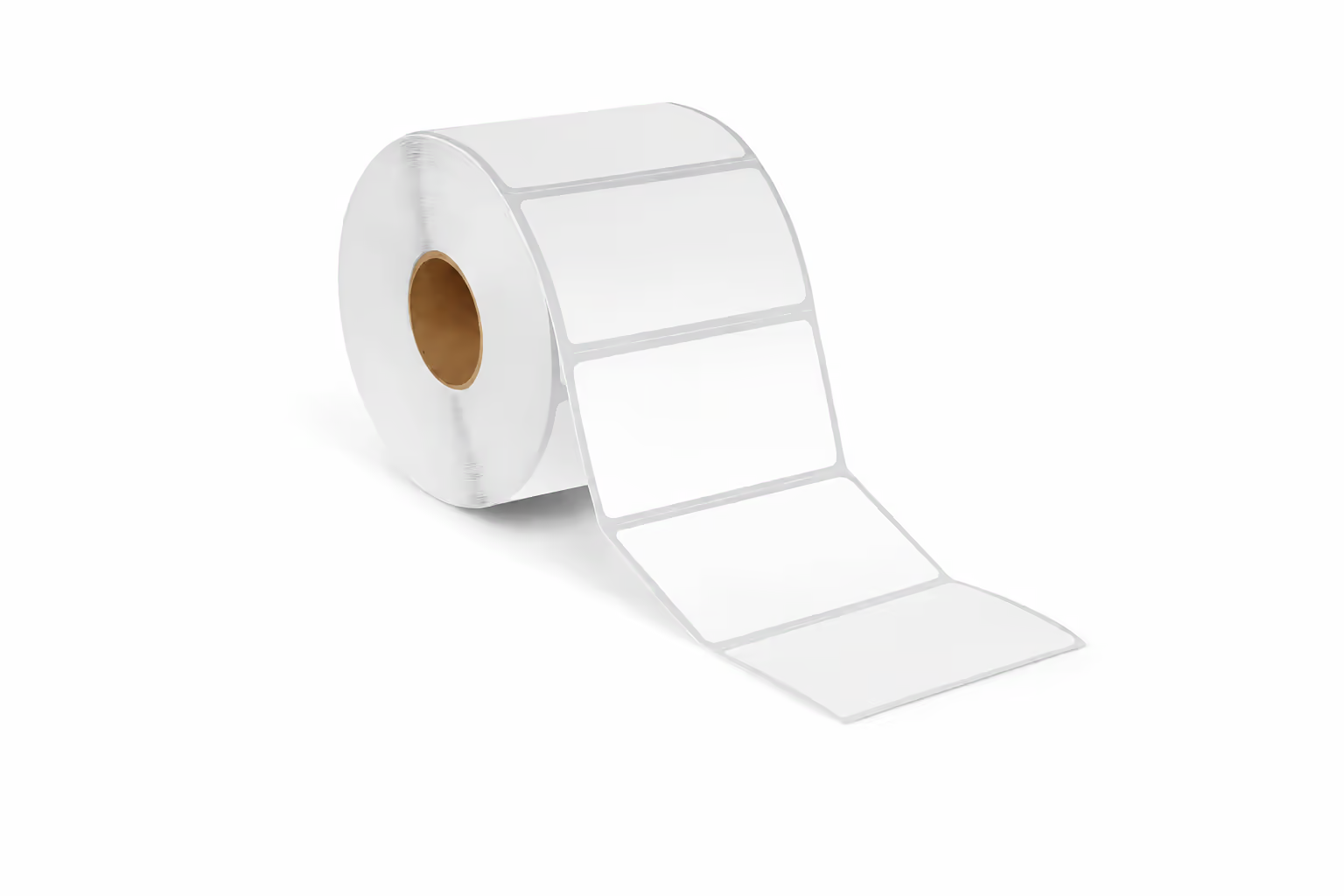
Blank Labels for Further Printing and Application
Blank labels are material prepared for further use in the customer’s process. They can be used for printing in label printers, manual application, automatic application, product marking, parcel marking, carton marking, warehouse location marking and production and logistics processes.
We do not assume a single standard label size without information about the device and application. The format, material, adhesive, winding, core and roll diameter should be matched to the printer, applicator, application surface and usage conditions.
When to Choose Blank Labels?
Blank labels are worth choosing when the label content is variable and is to be printed directly at the customer’s site. This particularly applies to processes where the label contains data generated from a warehouse, sales, production or logistics system.
Most common applications:
- barcode printing,
- QR code printing,
- logistics and shipping labels,
- product labels with variable data,
- warehouse labels,
- location marking,
- batch and series marking,
- production and expiry date printing,
- collective carton marking,
- component marking,
- manual or automatic application in the customer’s process.
Applications of Blank Labels
| Application Area | Example Use | Key Benefit |
|---|---|---|
| Production | batches, series, dates, component markings | flexible variable data printing |
| Warehouse | locations, shelves, containers, cartons | organized identification |
| Logistics | transport, courier, pallet labels | fast shipment handling |
| E-commerce | address, parcel and product labels | efficient order picking |
| Retail | price, information and product labels | on-demand printing in sales process |
| Quality control | statuses, inspection markings, batch numbers | clear process marking |
| Food and cosmetics industry | dates, batches, codes, operational markings | content matching to product batch |
Types of Blank Labels
Blank labels can differ in material, further printing technology, adhesive, format and contract packing method.
| Label Type | Best Application | Characteristics |
|---|---|---|
| Blank paper labels | products, cartons, documents, packaging | economical and universal |
| Blank thermal labels | courier labels, logistics, short-term | printing without ink ribbon |
| Blank thermal transfer labels | more durable markings, codes, technical data | require thermal transfer ribbon |
| Blank film labels | moisture, abrasion, more difficult conditions | greater durability than paper |
| Blank coloured labels | statuses, categories, visual identification | process organization support |
| Blank specialist labels | difficult substrates and demanding environment | selection after technical consultation |
How to Select Blank Labels?
Blank label selection should start with the device, application method and surface on which the label will be used. The size alone is not enough if it is not known whether the label will work in a printer, applicator, production line or manual application.
Key parameters:
-
Printer or applicator model
The device determines the maximum roll diameter, core diameter, label width, printing technology and winding direction. -
Printing technology
Determine whether the label will be printed thermally, via thermal transfer, laser, inkjet or another process. -
Label size
The format should fit the information, code, product, packaging and available application surface. -
Label material
Paper works in standard applications. Film or specialist materials are better for moisture, abrasion or more difficult conditions. -
Type of adhesive
The adhesive should be matched to the substrate, application temperature, usage time and working conditions. -
Winding and core
The winding direction and core diameter must be compatible with the printer, applicator or method of use. -
Usage conditions
Moisture, temperature, abrasion, transport, storage, hand contact and expected marking durability matter.
Blank Thermal and Thermal Transfer Labels
For labels intended for label printers, the distinction between thermal and thermal transfer labels is key.
| Label Type | When to Choose | What to Consider |
|---|---|---|
| Thermal labels | short-term markings, parcels, logistics, courier labels | do not require ink ribbon |
| Thermal transfer labels | more durable print, warehouse, production, codes, technical data | require matched thermal transfer ribbon |
| Film thermal transfer labels | moisture, abrasion, more difficult conditions | require appropriate material and ribbon |
| Paper thermal transfer labels | standard markings with greater durability than thermal | ribbon selection for material |
If the label is to be used short-term, for example as a shipping label, thermal material is often sufficient. If the marking needs to be more durable, a thermal transfer label with a properly selected ribbon is the better choice.
Blank Labels on a Roll
Blank labels on a roll are most commonly used in label printers, applicators and series marking processes. The roll parameters must be compatible with the device to avoid feeding, printing or application problems.
Parameters that can be determined:
- label width,
- label height,
- label shape,
- number of labels per roll,
- core diameter,
- outer roll diameter,
- winding direction,
- inside or outside winding,
- number of repeats,
- gap between labels,
- liner type,
- roll packaging method.
Blank Labels for Label Printers
Blank labels can be prepared for specific label printer models. When ordering, it is advisable to provide the device model, as different printers may have different requirements regarding core, roll diameter, winding direction and print width.
Blank labels work well for printing:
- barcodes,
- QR codes,
- address labels,
- courier labels,
- product labels,
- warehouse labels,
- batch numbers,
- serial numbers,
- production dates,
- expiry dates,
- location markings,
- data from ERP, WMS or sales systems.
Adhesive Selection for Blank Labels
The adhesive should be selected for the surface to which the label will be applied. The same material may behave differently on carton, plastic, film, glass, metal or a rough surface.
| Adhesive Type | When to Use | Notes |
|---|---|---|
| Standard | cartons, paper, typical packaging | for basic applications |
| Strong | more difficult substrates, shipping cartons, rough surfaces | stronger grip |
| Removable | temporary markings, documents, promotions | easier removal |
| Low temperature | cold rooms, chilled products, cold warehouses | requires matching to application temperature |
| Specialist | moisture, plastics, metal, difficult conditions | selection after consultation |
Blank Labels for Manual and Automatic Application
Blank labels can be used manually or in applicators. In the case of automatic application, the roll, winding, liner and gap between labels parameters are particularly important.
| Application Method | What Matters | Recommendation |
|---|---|---|
| Manual application | size, adhesive, ease of peeling | select format for product and workstation |
| Label printer | core, roll diameter, winding, printing technology | provide printer model |
| Automatic applicator | winding direction, gap, liner, roll diameter | confirm applicator specification |
| Logistics process | print speed, code legibility, durability | select material for label lifespan |
| Production | durability, resistance and repeatability | select material, adhesive and printing technology |
Typical Problems with Poorly Selected Blank Labels
| Problem | Possible Cause | Recommended Action |
|---|---|---|
| Roll does not fit printer | wrong core, diameter or winding direction | match roll parameters to device model |
| Label detaches from packaging | mismatched adhesive or difficult substrate | select adhesive for surface and working conditions |
| Print is not durable | wrong printing technology or mismatched ribbon | choose correct material and thermal transfer ribbon |
| Codes scan poorly | wrong format, contrast or print quality | optimize label size and printing parameters |
| Label jams in printer | incompatible liner, format or roll | verify device specification |
| Label wrinkles on product | material mismatched to surface shape | choose more flexible material |
| Label does not stick in cold room | adhesive mismatched to temperature | use low-temperature adhesive |
What Information to Provide Before Pricing?
To select the right blank labels, data regarding the device, application surface and usage conditions are needed.
When inquiring, provide:
- printer or applicator model,
- label size,
- expected quantity,
- core diameter,
- winding direction, if known,
- maximum roll diameter, if the device has limitations,
- type of surface the label will be applied to,
- whether the label should be thermal, thermal transfer, paper, film or specialist,
- label usage conditions,
- whether a specific adhesive is required,
- whether labels will be applied manually or automatically,
- expected marking durability.
Who Are Blank Labels For?
Blank labels are intended for companies that print variable data themselves or use labels in marking, packing, picking and logistics processes.
They are most commonly used by:
- online stores,
- warehouses,
- logistics centers,
- manufacturing companies,
- fulfillment companies,
- wholesalers,
- logistics operators,
- packing departments,
- quality control departments,
- retail,
- food industry,
- cosmetics industry,
- companies using label printers and applicators.
Blank Labels — FAQ
What are blank labels used for?
Blank labels are used for further printing or application in the customer’s process. They are used for marking products, parcels, cartons, warehouse locations, batches, series and documents.
Are blank labels suitable for label printers?
Yes. Blank labels can be prepared for thermal and thermal transfer printers. The appropriate material, format, core, winding and roll diameter must be selected.
What is the difference between thermal and thermal transfer labels?
Thermal labels are printed without an ink ribbon and work well for shorter marking lifecycles. Thermal transfer labels require a ribbon but provide more durable print.
Can blank labels be ordered in custom sizes?
Yes. Labels can be made in individual formats, with matching material, adhesive, winding, core and quantity per roll for the printer, applicator or customer’s process.
How to select adhesive for blank labels?
The adhesive should be selected based on the application surface, application temperature, usage time and working conditions. Different adhesives work on carton, plastic, glass, metal or rough surfaces.
What data is needed for blank label pricing?
For pricing, the following is needed: label size, quantity, material, adhesive, printer or applicator model, core diameter, winding direction, roll diameter, application surface and usage conditions.
Order Blank Labels for Your Process
Need blank labels for a printer, applicator, warehouse, production or logistics? Provide the device model, format, material, adhesive, winding, core and expected quantity. We will select blank labels for your printing or application process.