


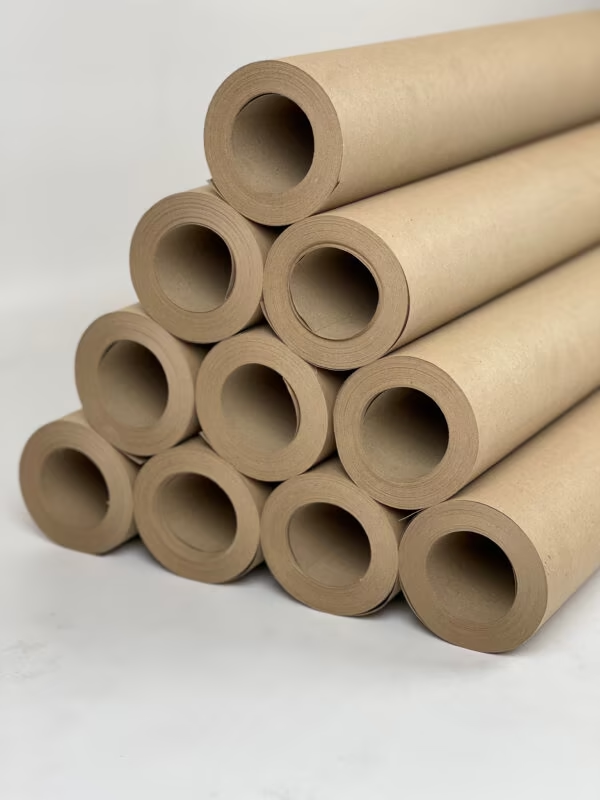
Protective Rolls for Surface and Workstation Protection
Protective rolls are paper and technical materials in roll form, used for temporary surface protection during renovation, construction, finishing, production, warehouse and service work. The roll format facilitates transport, unwinding and quick adjustment of material length to the current surface or workstation.
Protective rolls can protect floors, stairs, worktops, work benches, machines, production items, products, packaging and walkways. Depending on the application, a paper, kraft, technical, barrier, coated or waterproof variant can be selected.
When to Choose Protective Rolls?
Protective rolls are worth choosing when a surface requires temporary protection and the material should be easy to unroll, cut and remove after work is completed.
Most common applications:
- protecting floors during renovations,
- covering stairs and walkways,
- covering worktops and work benches,
- protecting surfaces from dust, debris and dirt,
- protecting items in production,
- covering machines and workstations,
- temporarily covering products in warehouses,
- protecting surfaces during assembly and service,
- work packaging and covering technical items.
Applications of Protective Rolls
| Application area | Example use | Key benefit |
|---|---|---|
| Renovations and finishing | protecting floors, stairs, walkways and work surfaces | reduced dirt and minor damage |
| Painting work | protection against paint, dust and debris | cleaner work and easier clean-up |
| Production | covering worktops, tables, machines and parts | protection of workstations and items |
| Warehouse | temporary covering of products and surfaces | protection against dust and dirt |
| Service and assembly | surface protection during technical work | reduced risk of scuffs |
| Technical packaging | wrapping, covering and separating products | simple protective material in roll form |
| Internal transport | protecting items during movement | surface and edge protection |
Types of Protective Rolls
Protective rolls can differ in material, grammage, width, wind and protective properties.
| Type of roll | When to choose | Characteristics |
|---|---|---|
| Protective paper rolls | standard surface protection | universal work application |
| Kraft rolls | greater paper durability | good for packaging and technical protection |
| Painting and construction rolls | renovations, painting, finishing | quick floor and walkway protection |
| Barrier rolls | more demanding conditions, dirt, moisture | additional protective function |
| Waterproof rolls | work with risk of moisture contact | better protection in demanding environments |
| Technical rolls | production, service, warehouse | parameters selected for process |
How to Choose a Protective Roll?
The choice of protective roll should be based on the surface type, nature of work and required protection level. Different parameters are needed for protecting a floor during renovation versus a workbench versus a production item.
Key parameters:
-
Surface type
Determine whether the surface to be protected is a floor, stairs, worktop, machine, production item, packaging or product. -
Type of work
The roll may be used during renovation, painting, lacquering, assembly, production, service or warehousing. -
Roll width
The width should match the surface and limit excessive material cutting. -
Wind length
The roll length affects replacement frequency, storage and work ergonomics. -
Grammage
Grammage affects tear resistance, protection level and application comfort. -
Moisture or dirt resistance
For more demanding conditions, consider a barrier, coated or waterproof variant. -
Method of use
The material can be unrolled manually, from an unwinder or used at a fixed workstation.
Protective Rolls for Renovations and Finishing Work
In renovations and finishing work, protective rolls allow quick covering of larger areas. They work particularly well where work generates dust, debris, dirt, minor scuffs or risk of contact with work materials.
Typical applications:
- floor protection,
- stair protection,
- covering corridors and walkways,
- protecting worktops,
- covering furniture or fixtures,
- surface protection during assembly,
- service and technical work.
Protective Rolls for Production and Warehouse
In production and warehouse environments, protective rolls can serve as auxiliary material. They are convenient for quick unwinding at a workstation, near a product, on a worktop or in a temporary storage area.
They work well for:
- protecting work benches,
- covering post-production items,
- shielding products from dust,
- interleaving and separating items,
- protecting assembly stations,
- covering machine surfaces,
- maintenance work,
- work packaging.
Barrier and Waterproof Rolls
Barrier and waterproof variants should be considered where standard protective paper may be insufficient. This applies to situations where the surface may contact moisture, wet dirt, paint, grease or other work-related factors.
| Variant | When to choose | Characteristics |
|---|---|---|
| Standard roll | basic protection against dust and dirt | economical and universal |
| Kraft roll | greater material durability | good for technical protection |
| Barrier roll | risk of dirt or moisture penetration | additional protective function |
| Waterproof roll | contact with moisture or wet environment | better protection in demanding conditions |
| Coated roll | need for modified use surface | selection for specific application |
Protective Rolls vs. Construction and Painting Paper
The Protective Rolls page covers the general group of protective materials in roll form. If the application specifically concerns construction, painting, lacquering or masking work, please refer to the detailed Construction and Painting Paper page.
| Page | Main intent | When to choose |
|---|---|---|
| Protective rolls | general surface protection in roll form | production, warehouse, renovation, work protection |
| Construction and painting paper | specific painting, construction and lacquering applications | renovation, paint shop, masking, finishing work |
| Packing paper rolls | packaging, wrapping and product protection | warehouse, e-commerce, packing stations |
| Kraft paper | packaging and technical material | when paper strength matters |
| Flat inserts | protection and stabilization inside packaging | cartons, layers, flat products |
Protective Rolls vs. Protective Sheets
A roll provides length flexibility and quick unwinding over larger areas. Sheets are better when the process requires a fixed format and repeatable material retrieval.
| Material form | When to choose | Main benefit |
|---|---|---|
| Protective rolls | variable lengths, larger areas, quick application | flexibility of use |
| Protective sheets | repeatable format and quick retrieval | no manual cutting |
| Blanks | specific dimension for workstation or product | process standardization |
| Reels | further rewinding or converting | input material for processing |
Rewinding and Converting Capabilities
Protective rolls can be prepared with parameters tailored to the customer’s process. Depending on material and availability, rewinding, winding, slitting or converting is possible.
Related services:
- paper rewinding,
- winding,
- slitting,
- paper sheeting,
- cutting to format,
- material converting,
- preparing rolls for workstations,
- packaging batches for the customer’s process.
Typical Problems Solved by Protective Rolls
| Problem | How protective rolls help |
|---|---|
| Surface gets dirty during work | roll creates a quick protective layer |
| Work generates dust and debris | material limits dirt contact with surface |
| Long walkway needs protection | roll allows covering larger area |
| Standard sheet format is too small | roll provides variable material length |
| Workstation needs covering | roll can be quickly laid on worktop or bench |
| Work conditions involve moisture | barrier or waterproof variant can be considered |
| Company needs work material for many applications | rolls are universal in warehouse, production and service |
Who Are Protective Rolls For?
Protective rolls are intended for companies that need material for temporary protection of surfaces, workstations, products or technical items.
They are most commonly used by:
- renovation companies,
- construction companies,
- finishing companies,
- paint shops,
- workshops,
- manufacturing plants,
- warehouses,
- assembly companies,
- technical service providers,
- maintenance departments,
- packaging companies,
- logistics centers,
- online stores,
- manufacturers of technical items.
What Information to Provide Before Quotation?
To select the right protective rolls, describe the surface, type of work and expected material parameters.
When making an inquiry, provide:
- type of application: renovation, production, warehouse, service, packaging or surface protection,
- surface to be protected,
- expected roll width,
- preferred wind length,
- grammage, if known,
- whether the material should be standard, barrier or waterproof,
- whether the roll should be on a core,
- whether the material will be used manually or on an unwinder,
- quantity of rolls,
- whether the order is one-time or recurring.
Protective Rolls — FAQ
What are protective rolls used for?
Protective rolls are used for temporary surface protection during renovations, finishing work, production, warehousing, service and technical work.
When should I choose a protective roll instead of sheets?
A roll is worth choosing when variable material length is needed, for quick unwinding over larger areas or flexible adjustment to the workstation.
Can protective rolls be waterproof?
Yes. Depending on application and availability, barrier, coated or waterproof variants can be selected for more demanding working conditions.
How do I choose the width of a protective roll?
The width should be selected based on the surface to be protected, for example floor, stairs, worktop, work bench, machine, product or workstation.
Are protective rolls the same as construction paper?
Not necessarily. Protective rolls are a broader group of protective materials in roll form. Construction paper is one possible application or variant, particularly for renovations and finishing work.
What information is needed for a protective roll quotation?
For a quotation, it is helpful to provide the type of application, surface to be protected, roll width, wind length, grammage, required resistance, quantity and method of use.
Order Protective Rolls for Your Process
Need protective rolls for protecting floors, stairs, worktops, machines, products or workstations? Provide the application, width, wind, grammage, quantity and required protection level. We will select the appropriate protective roll variant for renovation, production, warehouse, service or packaging.